

A letter to the future Camron Galt.
Dear Sir,
I was flattered that you read Varhaus No. 11 yesterday. You asked: Is that me? Yes, I was writing to you. No, the character in the book is not currently you.
Camron Galt is, at once, a placeholder and a composite of some developers I know. You may be reading yourself into the book. That’s a huge compliment to my work. Thank you. You give me hope for my writing future.
Art is not about pretty pictures. Gentrification is not a dirty word when it happens organically. The cycle of urban renewal is, in fact, the same idea that God has created to maintain forests. Growth, towering density, decay of discarded growth, organic decomposition, wind, lightning, wildfire, prairie, regrowth. Renewal.
Unpredictable, yet trustable. Wonderful.
Varhaus, the novel, ends in the middle of the cycle. The artist has left. What did he leave? What is of utility to those who come later? What can be used?
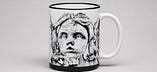
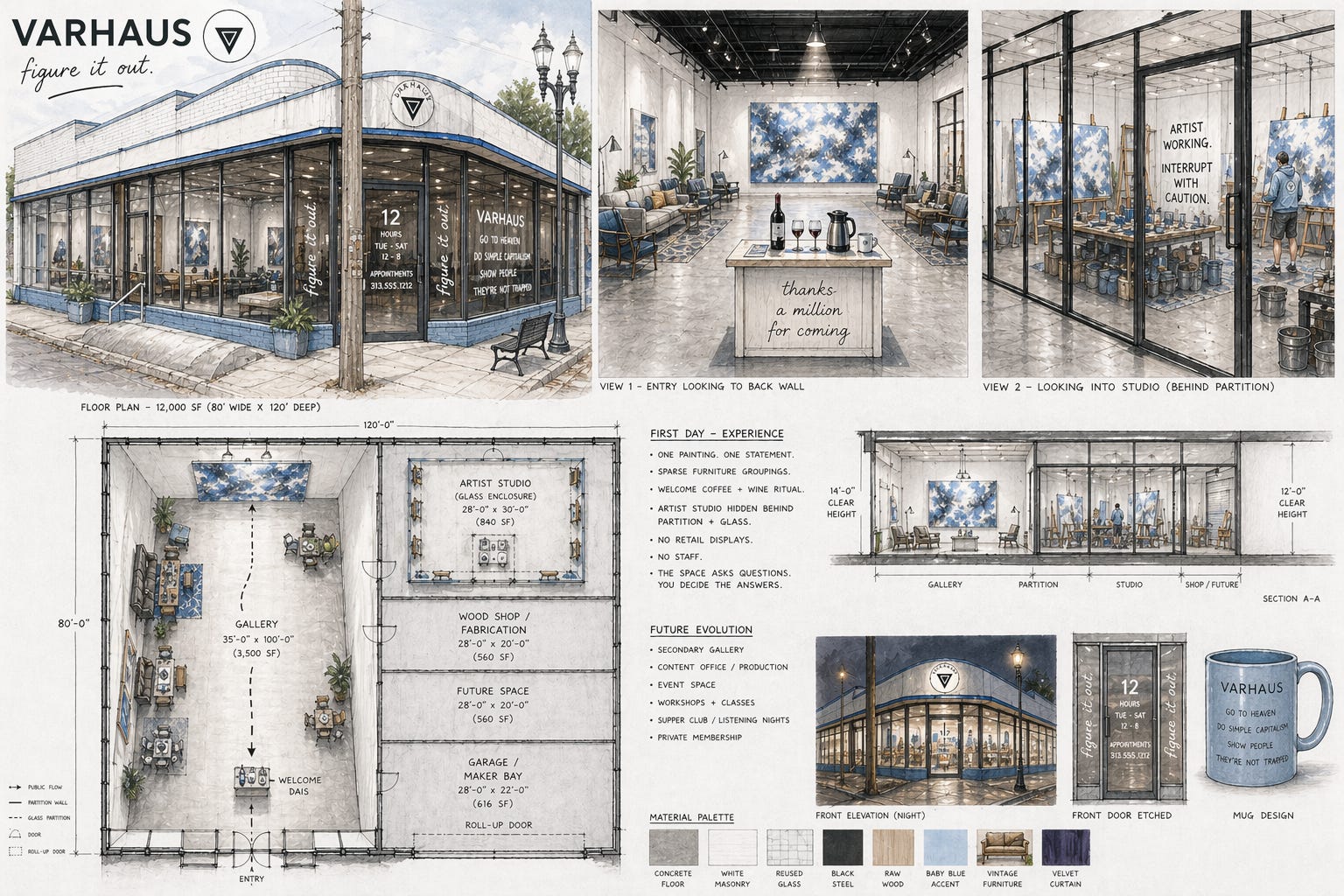
He’s left an activated building with an army governed by an unbreakable philosophy. A theology stripped down into a verse and three operating points. All held by a coffee mug, more: held by the act of sharing coffee. Hospitality.
He’s left a permanent exhibit that has travelled the country touching folks. This is a central theme. Send it out into the world, get it back. Varhaus’s reach is not confined to the city limits and those who live within them. A new chef from Detroit. An operator from New Orleans. A staff of professionals tied together with like thinking.…..with individual talents…serving others to serve God with the gifts God has given them.
Not only the shed...but this hospitality is also spread digitally, through snail mail, through traveling art festivals.
The artist has left a self-realizing building and business. It can make its own physical items, affect its own aesthetic and change it overnight.
There are many other after-effects, but the best, most valuable thing that Jason leaves with Varhaus is the story.
Story creates value. Varhaus says: come discover our stories. Come and see. It asks, almost demands, that the observer actively participate to realize the value.
Something to see, something to do, and something to believe.
The stories and the mechanisms that deliver them always reverse on each other. Varhaus uses its local population to create interest outside its city. Then it reverses that outside interest, bringing a wider legitimacy home to its neighbors. It makes a boys event for the enjoyment of the children to allow parents to enjoy the world like children.
If I may be so arrogant: I have pulled an even more clever paradox dupe on you. I wrote Varhaus before it became a thing. If someone jumps in to make it real, they don’t start with an empty building. They start with a story people already know and want to see happen.
And if you’ve already read the book, watching what actually happens becomes another story altogether.
Vice versa too.
So the question is not: “Is that me?”
The question is:
“Could it be me?”
Space and time, Cam.
Jason
This letter is in reaction to a story. The story starts here…
