
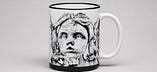


No. 1
Varhaus.
April 2, 2027.
3:05 pm
You approach an old building with a new sign: Varhaus
On the glass door, etched lettering: “figure it out.”
You pull the door open, it swings off-true. No bell rings. No electronic alert. You slip through. The door slams behind your feet, then settles halfway in the jamb. You expect the commotion to announce your presence. It does not. It seems empty. The place is old, but uncluttered. The concrete floor is untreated but patched and clean. The walls are flat white. The ceiling is high and flat black. A few furniture groupings sit around the room: used chairs, coffee tables, an ugly but clean couch. Directly in your path sits a dais. Or maybe a hostess podium. No one staffs it. A single spotlight shines from above directing you to a pair of fine crystal wine glasses, an opened bottle of Pinot Noir. On the same pedestal sits a full pot of coffee and one simple mug beside the wine.
Below, on the face of the stand: “thanks a million for coming”
You pour yourself some coffee. You take it in. The coffee is too rich and bold for the environment. The room is long and narrow, yet large. You realize you are only seeing part of the footprint. The flat white paint and the sparse decor make it feel larger than it is. The coffee pot sits roughly 15 feet from the front door and with sixty feet of room running to the back wall. There is no evidence that this is a store or a place of business. To your right, a partition seems to block an opening to the rest of the building.
Some people would ask what is going on here.
You think:
Anything can happen here.
On the back wall, as if your senses have been subtly cued a line of sight to move your eyes from the welcome java to the main attraction, a massive abstract painting. It pops off the wall like a greeting. Good to meet you! Aside from a singular spotlights placed above the furniture like nightlights, the art is lit fully and professionally. You stare at the painting from your fresh coffee stance. A hum becomes noticeable.
You don’t know too much about art, but as you slowly walk to the back wall, the painting draws you in, the vibration gets stronger. You stop thinking. The deep bass becomes white noise for your focus. You observe the painting without attempting to add meaning.
..a flash of light to your right.
You whip your head right and see a man in a human fishbowl. Hidden behind the partition and the painting, he has no idea you’re watching. It is not a fishbowl but an art studio encased in repurposed glass. Three temporary 2x4 easels hold twelve-foot paintings....similar to the size of the painting that drew you in. In the middle of the U-shaped arrangement sit huge tables scattered with paint, tools, and objects whose purpose you can’t guess.
The hum? Music in the fishbowl. Apparently very, very loud.
The artist wears cutoff Puma sweatpants, a steel chain with medals and saints, and half-dried paint on his bare chest. You find a chair and watch while you drink your coffee. The artist moves with purpose or not at all. There is no middle ground of wasted action. He is either deciding or executing. Thinking or painting. Never a second guess. Never a move to reconfigure. Paint, stop, paint, stop.
The bass shakes the glass of the studio. You recognize it. Wu Tang...He has no idea you’re there. His concentration, his craft, and “Protect Ya Neck” keep him fixed on making. The studio door bears an etched sign in the same font as the front door and dais:
Artist Working.
Interrupt with Caution
You watch until he breaks routine and reaches for a coffee mug. Finding it empty, he heads toward the door toward you. He observes your presence for the first time, turns around, turns down the volume, and pulls a baby blue hoodie over his head. Varhaus on the chest.
Hello, I’m Jason. I need coffee, would you like some more?
He comes back with the coffee and a third mug wrapped in a branded box. He smiles appreciatively and gifts you the mug:
VARHAUS
GO TO HEAVEN
DO SIMPLE CAPITALISM
SHOW PEOPLE THEY’RE NOT TRAPPED
You ask what the painting means. He points to the mug, shrugs, then turns the question back at you. He nods at your answer.
“The why is more valuable than the what. The reasons are on the mug.”
No. 2
October 19, 2027 Noon
It’s been a few months since you visited. You’re in the neighborhood with an old friend.
“I have to show you something.”
There are two fine cars and a beater truck parked in the parallel parking spots in front. There’s now a back lit professional sign: Varhaus. Etched on both sidelights of the door installation: Figure it out. Figure it out. Figure it out. On the Glass Door, hours of operation, a phone number for appointments and a huge number 12.
The door opens effortlessly and slowly comes to rest behind you. Your view is blocked by a large wall painted white, perfectly painted eggshell white. It is covered with a message written in a sloppy golden graffiti. “Be not conformed to the patterns of this world, but be renewed by the transformation of your mind”...you take a moment to decipher the scrawl and continue past the wall to the open room. More questions than answers.
You were excited to show your friend the painting you discovered on your last visit. It is nowhere to be found. Instead there are 10 huge paintings on the wall. You scan them all to find the one you’re looking for. No luck. You find a welcome desk just past the entrance with a dozen bottles of wine, crystal set up like a cocktail party and a professional coffee pot circled by the very same mug you have in your cabinet at home.
As you help yourself to a couple of wines that you’d never heard of, a woman’s voice greets you from an unseen location.
“Thanks a million for coming. Look around. I’d love to hear what you think.”
The middle of the room is quite dark except the odd spotlight located above various furniture arrangements. The arrangements are eclectic but seem curated. One, looks like your grandmothers home. One looks like a mid-century modern couch and chair sitting area. One is a modern office desk set up with three monitors and full-blown video production rig with soft-boxes. New rugs cover the concrete floor beneath each setting creating a sense of completion to each lounging package. These are comforting spots to talk and hang, but upon further inspection you realize that their positioning, every seating place, has a perpendicular view of an artwork.
The paintings and the walls glow in white light as if one little shadow could ruin the whole show. A slight music plays in the background, gregorian chant or some form of calming music.
You’ve stopped looking for the painting you came to see and carry on toward the back wall to see if the artist is in. The glass is pitch black. The woman, standing near a partition is talking on the phone while sitting at a small desk. She smiles at you with her eyes, but continues to speak into the phone: “You’re right, the photos just don’t do it justice.”
Your friend plops down in a replica Eames at the MCM area. She crosses her ankles and puts her wine down. It’s the first time she’s sat down in three days. She expects you to sit too, but you begin to meander. Some of the paintings are better than the one you saw previously. Some are not quite to your taste. But they are massive, energetic and colorful. They are so large and so abstract that you feel as though you may walk into them, proceed within and exit through back to a new world. Like the back door in the wardrobe to Narnia.
You seek the information relevant to the paintings. Low, to the right of each is a small placard where you would expect the details of the work: size, year, medium, price, etc. But no. You’ve learned in two trips to Varhaus that nothing is obvious. The card simply says: figure it out.
Somehow, your gaze and investigations have been limited to the back and left of the building. With the exception of looking for the darkened painting studio near the back wall and to the right, you missed 2/3 of the right hand side. You observe your friend, relaxing and drinking her wine, you notice a great curtain behind her. It’s purple and it looks lush and regal. It hangs from the ceiling to the floor.
As you’re pondering this, you remember: “Where is the artist?” This thought comes to you as the woman from the phone enters your space with an uncorked bottle of wine. Before greeting her, the question leaps from your lips as she tops you off. Where is Jason?
“He’s in New Orleans with his wife. It’s been his busy season. A pop up in the Southampton. Festivals in Tampa, Naples and Miami. They are celebrating her birthday in their favorite place. He says that NOLA refills him to paint.”
“I was here six months ago and he gave me a coffee mug. The place is so different, it’s evolved. There was only one painting. It had a different energy. It’s calmer now and not so dramatic.”
“Do you want to see his new studio?”
She pushed a button on her phone and the purple drapes retracted revealing two full glass garage doors. When the moving curtains came to a stop, the lights came on behind the glass. A white hot light. On each pane of glass was a different saying. Some were from the coffee mug. Some Bible verses. Some inspirational quotes. The largest etched graphic, pasted over two of the larges panels in the glass door: “Remember, Remember the Twelfth of December.”
You don’t bother to ask what it means.
You walk over to peer in. As you approach, the garage doors rise silently. With the exception of the huge easels, it was spotless. The table in the middle of the u-shaped workspace was like quartz. Anything could be made in that studio. It could have been a chocolatier’s kitchen. An electronic technician’s lab. A lunch room.
“He hasn’t moved in yet. When he gets home, he’ll set up for paint. The studio you saw on your last visit will become the workshop.”
“workshop?”
“The workshop builds frames and sizes substrates for the paintings. But, more importantly, it’s the engine for making the ideas. Between the workshop and the new studio is Jason’s personal office and space.”
Your friend joins the two of you. She’s now invested in the speaker. She inquires into the woman’s position.
“I walked in here one day, just like the two of you. It was sparser. He was painting and basically ignored me when I asked him about the painting that was in progress on the easel. He asked me to have a beverage and sit down for a few minutes, he’d talk when he was finished. An hour later he sat down with a coffee. I asked him what he was doing with this space. He sidestepped my question and asked me fifty. His questions were probing about my belief system, my interests and why I was drawn to interrupt a working man. Not rude, intense.”
The conversation concluded when he handed me a coffee mug.
“I’m looking for people like you. You can come by any time. We can do anything here.”
Your friend interjects: “but what do you do, here?”
The woman smiles. “Sometimes I sell paintings. I sell the historical furniture arrangements that I love and collect. I talk to people like you two. I follow the rules on the mug, not because they are rules, but because they fit me.”
“I suppose my accidental job is to soften the intensity of the artist. I’m Ruth.”
“Nice to meet you, Ruth.”
“He’s an asshole, then?”
Ruth tops off your wines with a smile.
“Only if you misunderstand him. Let me put it to you like this: even chocolate cake tastes bad when it’s shoved down your throat. I cut nice slices.”
You share a smile. Women know.
You hear a door open from the back of the space. Men talking, voices coming nearer. Two men walk by, one in pinstripes, the other in casual wear. They pause their gait long enough to nod pleasantly and say hello. They continue in tandem out the front door and into the Range Rover and Chevy Suburban parked in front of Varhaus. They speed away leaving the beater truck parked alone.
Ruth excuses herself. She heads back to where you first found her and begins to dial the phone. Full glass of wine, you proceed granny’s kitchen arrangement near a baby blue painting. More questions than answers.
Your friend goes silent for a few minutes. She looks into the painting intently.
“I see so many things in this painting. I don’t know if they are on purpose or by accident. What does it mean?”
You remember: “The why is more valuable than the what. The reasons are on the mug.”
To yourself: “What does it cost to do this?”
No. 3
December 12, 2027 6:30 pm
The invitation arrived weeks ago. Before Thanksgiving. A wrapped white package leaning against your front door. No return address. You opened it on your kitchen table. A blue painting. Flipping it over to look for a signature, you found a message embossed in white lettering on blue labeling tape, like your grandfather’s shop organizers.
Merry Christmas, Sara Join us on 12/12 5 pm until 10 pm Look dope. Bring only the name of the person you most worry about.
Confusion. How did they find me? Bring a name? What the hell? More questions than answers.
You’re driving downtown. The town is dead. Yesterday’s snowstorm has made the city silent. Sure, there’s traffic, but it seems every car is passing through to somewhere else. The storefronts are dark. Parking is available everywhere. Amazon Christmas.
Further on, to your left, fifty cars parked in front of an amber snow globe. You didn’t get dressed up for nothing.
You parallel park a block away, rueing the certain salty ruin of your best pink soles. You organize your purse beneath the seat and step out. At the rear of your car, you keep your eyes down, avoiding the slush. A valet stands quietly until you look up from your shoes. He’s wearing gray coveralls with white pinstripes and a Varhaus logo. He holds out his hand as you reach the curb.
“I’m sorry if I startled you, Ms. Douglas. I’m Mike. Merry Christmas from Varhaus.” Mike offers his arm and escorts you over the only dry sidewalk in the city.
“When we get inside, I’ll hang your coat. You’ll need this. Your job is to enjoy yourself. There will be a ten-minute program at 7:12. Did you bring a name?”
You smile and confirm you’ve done your homework. One-handed, you pull the lanyard over your head and look at it. “Prima”? Mike opens the door and ushers you inside. You hand him your coat, and he takes it away with a smile.
You pause to gather yourself.
The spray-painted wall. “Be not conformed” in pink, drippy Rust-Oleum. A familiar face smiles and offers you a flute of champagne. She’s wearing the same jumpsuit as Mike, but with a string of pearls and heels.
“Merry Christmas, Sara. You look amazing.”
“Merry Christmas to you, Ruth. Thanks a million for having me. You even look classy in a mechanic’s outfit. This place confuses me so much. What the hell is going on?”
She laughs as if thrilled by your confusion.
“I cannot tell you. I mean, I can’t enunciate it. I’ll tell you this. Tonight’s event is the closest we get to an explanation. We’ve been working on it for a year. Varhaus is something to be understood individually. Describing it ruins it for people.”
“The mug.”
“Yep. The mug.”
To the right, a banquet table: Collectors. Handmade wooden boxes, all different, with red bows. Wood-burned logos on the face of each box. A branded Brand. The largest box, centered on the table: Sara Douglas.
You look back at Ruth. She shrugs and extends a hand, inviting you into the party
Entering the festivities, Varhaus is unfamiliar again.
The main room was long and rectangular. Now it is square, crowned by a hanging four-foot disco ball. Two adjacent rooms are fully opened to the party and brightly lit: the paint studio and the workshop. Ruth’s furniture collections are raised above the crowd and occupied by guests. The far wall is obscured by a suspended curtain of traditional Christmas lights, the sort that only look good when there are too many.
You almost bump into a man playing cello in a jumpsuit, red kerchief, and matching fedora. Somewhere unseen, a piano answers him. The crowd ebbs, revealing a woman with a violin strolling through the sea of conversation.
Sidestepping the cellist’s chair, you look left and observe the guests at a 1950s kitchen table rise from their seated positions. The cluster of people mingling in front of them misses the gesture.
You make a few quick observations about the staged furniture settings. The themes are the same as you remember: grandma’s kitchen table, the MCM lounge, the full-blown content creator’s workstation. Actors. They have actors. At grandma’s table sits a family of five dressed like the cast of My Three Sons. On the mid-century couch and chairs, eight stylish men and women in lounge coats and cigarette pants smoke pipes and look sophisticated. At the computer desk, a twenty-something works while five monitors show a Zoom call with what appears to be hundreds of people. He’s wearing coveralls and audio cans.
When the family rises, the music stops. The conversations continue. Unnoticed, the violinist steps onto the platform beside the actors. She gives an exaggerated nod. Her bow slides across the strings like the first loops of a knitting needle beginning a winter sweater for a loved one.
A voice from nowhere:
“Gloria.”
And the standing family answers in harmony:
“in excelsis Deo.”
Guests whip their heads around, searching for the singers. They turn toward the kitchen as the stylish men and women rise behind them and sing the first verse a cappella, forcing the room to turn again. The piano and cello join. The music caresses the spectators from front, left, and right. Surround sound. They back themselves into the dead corner of the room, trying to position their ears to take it all in at once.
After three songs, the littlest boy in the choir is helped onto the kitchen table by the violinist.
A lone cherub singing in the wilderness: Silent Night.
The music ends, and your feet still have not allowed you to join the party. Your wine is nearly gone. Can a girl get a drink in this place? You move right, toward the painting studio. The crowd gathers to congratulate the players.
A man sits alone in the studio beneath an unfinished painting, drinking from a mug. His face holds only the satisfaction of the first cup of coffee on a winter morning. You have not seen Jason since your first visit. He is wearing gray Puma sweatpants and aquamarine New Balance 574s.
“Are you hanging with all your friends?” You jest.
“Hi Sara. Welcome home. Looks like you need more bubbles.” He smiles, stands, and shakes your hand. Then he reaches into an ice bucket on his worktable, tops you off. “There you go. Thanks a million for being here.”
You’ve wanted to ask him all sorts of questions. You decide you would not receive a straight answer to any of them.
“I love my mug. I love the idea on it. But I still don’t understand what you’re doing in this building.”
He deliberately misreads the statement-shaped question.
“What am I doing? I’m thinking about how much work we’ve done to get to today. I’m counting my blessings. I’m thinking about what to do next.”
“You’re not enjoying the moment? This amazing event? The culmination of your work?”
“I already enjoyed it while making it.”
You make small talk. He escorts you back into the party and introduces you to art collectors, local artists, a retired priest, a real-estate developer, and his wonderful wife.
When he introduces his wife, you observe his joy for the first time.
7:12
“May I have your attention?”
Ruth steps onto a small stage. Behind her hangs a fire-hazard curtain of gaudy holiday lights. No dais. No props. She holds a Varhaus coffee mug. She stands a head taller than most of the gathered crowd.
“Merry Christmas. Welcome to Varhaus. Thanks a million for being here. We have three things to do in seven minutes. Two speakers and a half-done art project we’d like help with. Please welcome Jason.”
Jason climbs the step to the stage. He has not changed his clothes.
“Thanks a million.” He does not smile. “I’d like to recognize two people.
Camron is our first YES. Thank you for allowing us to fill your building with art and philosophy. I intend to repay your trust.
And, our first-ever visitor to Varhaus: Sara Douglas. She is our second YES.” Jason gestures toward where you’re standing. A warm round of applause. You blush. You had no idea.
“The philosophy of Varhaus is manifest in this building. The rules are a coffee mug. The operating agenda is a Bible verse spray-painted on a wall. The why is greater than the what.
That’s all the explanation you get.
I’d like to introduce our partner and reveal our project. Everyone, meet Andrew, my friend and favorite metal guy...”
He is standing next to you. He looks like a ready-to-work lumberjack drinking coffee, waiting for the go-ahead. He wears a graphic T-shirt that reads: Hail Mary full of grace, punch the devil in the face. He is wearing Vans. You think he looks dope.
When your name is announced, he touches your shoulder. You are surprised to be recognized and slightly embarrassed, but his smile says: that’s so fucking cool. You love him immediately.
When introduced, he grabs your hand and pulls you onto the stage. He points at you.
“Number one!”
You step back down into the crowd.
“We think the rosary is the most powerful prayer in the world. We believe only God can save us. Our goal is to amplify our service to the world by building a traveling prayer. Jason, Ruth, and I teamed up to make a crazy idea.
Before Jason was an artist, he made a five-day retreat in a monastery. In the woods of the enclosure was an old shed. The Rosary Shed. People walked from the chapel to this ramshackle one-room pull-behind trailer to say the rosary. Many visitors wrote the names of their prayers on the wall. I visited a few months ago and found it still standing. I found the names of thousands of people who had been prayed for.
So we made this shed. We want to send it around the world. We want to fill its walls with names.”
The gaudy curtain of Christmas lights goes dark and rises, revealing a Tom Sawyer white garden shed, too big for a snowblower and not big enough for an art studio. You guess it to be twelve by sixteen feet.
The entire venue blinks pitch black. Everyone silent. One spotlight strikes the shed, its white skin throwing back an ethereal glow.
You stare at it as if you’ve never seen a garden shed in an art gallery before.
The spotlight clicks off. Still silent. A single candle burns inside the shed. You can see it through the sliding glass entry. In the flicker, a shadow. A murmur from the shape casting it.
A man kneels near the candle. You cannot make out the words, but you went to Catholic school, so by context, you know. After a moment, the whole building lights from within. The soffits beneath the roofline ignite too. A shining shed on a hill.
You forget where you are.
The kneeling figure is the priest you met earlier. Ruth walks to the glass door and slides it open. The prayers emerge.
“We welcome you to come inside and see our shed. We call it The Joyful Mystery. There are paint markers. We invite you to write the names of your prayers on the wall. You may join Father. If you know the rosary, you may give him a wine break. We only ask that you respect the solemnity of others.
Sara, as our most honored guest, we invite you inside first. We cannot thank you all of you enough for being here. Mike and his mother assembled the most amazing sandwich bar in the workshop. Jason will be in the studio. I am here. The music will begin again.”
“Wait!” someone in the back yells. “Tell us more about what you’re going to do with the shed. Where’s it going to go? How will you fund it? How can we get involved?”
Your curiosity about the shed is already pulling you toward it. You hear the questions. Absentmindedly, you call over your shoulder:
“Figure it out.”
Jason doubles over laughing.
“SHE GETS IT!”
You pass through the open sliding door. You are struck. Looming above the kneeling priest, a crucifix of nails.
The cross runs from the peak of the shed to the floor. An untreated I-beam. Rough and used. Chalk marks and handwritten measurements remain from craftsmen who put it to its first purpose. You imagine steelworkers fitting it into a building fifty years ago. Above the body: INRI.
But the body. The corpus. Holy s...My Lord and my God. There must be ten thousand nails arranged in the shape of Christ. The sharp tips point downward toward his feet, except for the crown of thorns and the spikes securing the Messiah. The brutality of metal shaped into flesh weakens your knees. You sink onto the kneeler beside the priest. He pauses.
“Who do you want to pray for?”
“My Aunt Jenny. And, if you don’t mind, and, if it’s not too selfish...”
He finishes your sentence.
“I have already prayed for you tonight. When you get home, will you pray for me?”
“I will. Thank you, Father.”
You rise and grab a paint marker. Then you fall back to your knees and reach toward the cross. You write her full name on the I-beam beneath Christ’s feet. You pray. You kiss the priest on the cheek.
Ten people wait behind you, craning their necks to see what you’ve seen. Others write the names of their whole families on the outside of the shed. You decide to have a sandwich and find your champagne flute.
You give up on the glass and enter the woodshop. Ridiculous sandwiches.
A sixty-year-old woman in a Varhaus jumper points a spatula directly at your stomach.
“You look hungry. You’re Sara, right? You and me are going to make you the best sandwich you ever ate. Look, I shaved this beef tenderloin so fine. I sliced this chicken from my neighbor’s coop. It has rosemary and thyme. I pickled these beets and made my grandmother’s special relish. I have seventeen cheeses and nine meats. Three kinds of bread. Jason calculated that with all the toppings and meats, we can make 5,287,680 unique combinations.”
You walk away shaking your head. Roasted pork loin. Rosemary chicken. Goat cheese. Smoked gouda. Wax pepper mustard on warm fresh sourdough. Now you’re looking for water.
You set your food beside a pleasant couple at the MCM table. The woman smiles and says hello. You spend an hour talking about life and art. They flew in from Fort Lauderdale to see Jason for this event. They own several of his paintings and just bought another. They bring up the abstract painting inside of The Joyful Mystery. You admit you missed that part. Mostly, you talk about the cold and how to drive in snow.
You are preparing to leave. Shoulder tap. You remember him. He was sitting at the workstation with all the monitors.
“I have some people who want to meet you.”
He lifts your glass from the coffee table and guides you toward the office-stage setup. Jason and his wife are seated at the desk with headphones and microphones. It hits you.
“I thought you were a prop. An actor. You work here?”
“Um, sort of. I’m a broadcaster of sorts. Currently we’re livestreaming to 127 people in four countries. I’ve been meeting them for months. They’ve been asking to meet you. As the first visitor, they want to know your impressions. You don’t mind, do you?”
“I’ve never done anything like this before.”
“It’s easy. Just be yourself. You’ll figure it out.”
Jason and his wife wave bye to the streamers. They stand and greet you.
Mark fits you with headphones and a microphone. You sit down. 124 webcams wave. 72 coffee mugs rise in a digital toast.
“Wow. Hi, guys. Thanks a million...”
One week later, on December 20, Camron hosted a gala at Varhaus for his business and the community. Ruth represented Varhaus and its interests. There was no spectacle that night. The people were the attraction.
Seven paintings sold for $42,000. Jason donated a large black-and-white to the live auction. Another $22,000 was raised for the food bank. Ruth sold two furniture arrangements.
Just in time. The new year was coming.
Varhaus needed room.